What to see in Aurangabad, 5 Top Best places to visit in this city.
September 17, 2026
Unfortunately, our Pune trip was so short. After spending a single day in this cultural capital, we headed to Maharashtra's historical city. The city was an important seat of the Mughal Empire during Mughal rule in India. We had made journey to Aurangabad from Pune by road. Which is 230 km via Pune Expressway. You can travel to this town by rail or Air. Easily connected with city from anywhere in the country. The airport is just a short distance from the city. Whereas the nearest rail stations are Jalgaon or Manmad. Both are 56 to 65 km by road from the town. But we were in the mood for a road trip. It took a 7-hour journey. To explore this historical city, we had reserved for 2 days. After breakfast with Jumbo Size Omlette which contains 6 pcs eggs with vegetable and Cheese and Masala Dhosa with coffee. It was a long journey, so we started from Pune at 7.45 am. The journey was so peaceful and we reached safely due to good road conditions. We had chai break after 2 hrs run. A few km later, we stopped at a highway Dhaba for lunch. Roti, Sabji, Egg Curry with Raita was the perfect combination for road trip. The rate was also very reasonable. We arrived in Aurangabad by 5.10 pm and decided to rest for the day. After evening tea and snacks with Aloo Bhaji, we had reserved an auto for TARA PAN SHOP. The 100-year-old Pan Shop is located near Gurudwara in Usmanpura.
Now, what to do in Aurangabad for the next two days?
DAY 1- Aurangabad - ELLORA, BIBI–KA–MAQWARA, DAULTABAD FORT AND GHRISHNESWAR TEMPLE —
It was the 2nd day in this historical town. This town is a destination of terrific/ancient Mughal Art and Architecture. Aurangabad is a convenient base for seeing India’s timeless art at the renowned Ajanta Caves and Ellora Caves.
Aurangabad is the gateway to these caves. The city was founded in 1653 by Aurangzeb, who established his capital and became the viceroy of the Deccan. It is surrounded by Lakenvasa Hills in the North and Satursa Hills in the south. The present-day city is the district headquarters, and the government names this city as SAMBHAJI NAGAR.
Our 2nd and last day in Aurangabad was reserved for Ellora Caves along with Bibi–Ka–Marbara, Daulatabad Fort and Ghrishneshwar Temple. For this day-long tour, we had packed some dry fruit, biscuits, cake etc. Early morning by 8.30 am we had started for our cave trail. Ellora is just 30 km from the city. On the way we had noticed 2 or 3 Gates which was built during Mughal era. The city has around 12 – 13 gates. Previously, there were 52 Gates. When Aurangzeb made Aurangabad his capital, there were 54 Suburbs. All gates are associated with this. But the city has four main entrances — Delhi Gate in the North, Jalna Gate in the East, Paithan Gate in the South, and Mecca Gate in the West.
We started our journey with Ghrishneshwar Temple. Just 1 km from Ellora Cave. The temple is the 12th and last Jyotirlinga in the Indian pilgrimage circuit. According to historical evidence, the temple was built in 7th century by Sati Ahiliya Bai and her mother–in–law, Gautam Rai. Even after the 16th century, the Mughals attacked Grishneshwar Temple multiple times. During the Mughal-Maratha wars between 1680 and 1707, it had to be rebuilt a couple more times. When the Mughal Empire was overthrown by the Marathas in the 18th century, it was reconstructed for the final time. The Temple is the smallest Jyothiralinga Temple, and it was rebuilt by Maloji Bhosale, grandfather of Shivaji, in the 16th Century.
- Grishneshwar Temple is built in the style of a typical South Indian temple.
- Inner rooms and a sanctum sanctorum make up the temple complex.
- The building is 44,400 square feet in size and is built of red coloured stones. Grishneshwar Temple is also the smallest Jyotirlinga temple, with these dimensions.
- A 5-layered tall shikhara may be found in the temple.
- The traditions of Lord Shiva and Lord Vishnu's eleven incarnations are largely depicted on the red-stone walls.
- The Shivalinga is facing east in the garbhagriha, or sanctum sanctorum. It is around 289 square feet in size and contains a Nandi statue in the corridor.
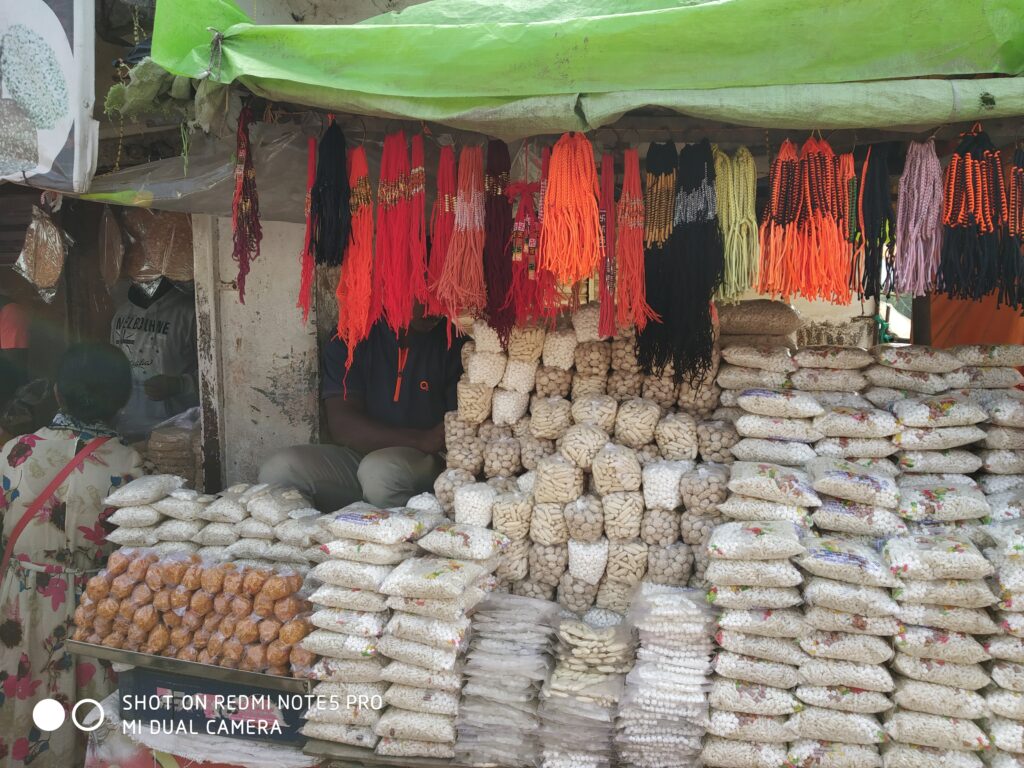
It was Sunday, so entire courtyard was full with devotees. There are over 100 of shopping arcades food stalls, souvenir shop and more.
How to reach the temple - Maharashtra State Transport buses connect the city to the temple, which is 31.5 km distant. It's about 29 km to the Aurangabad Central Bus Station. Alternatively, book a taxi from Aurangabad to Grishneshwar Temple. The best option is to travel SH 60 – NH 52.
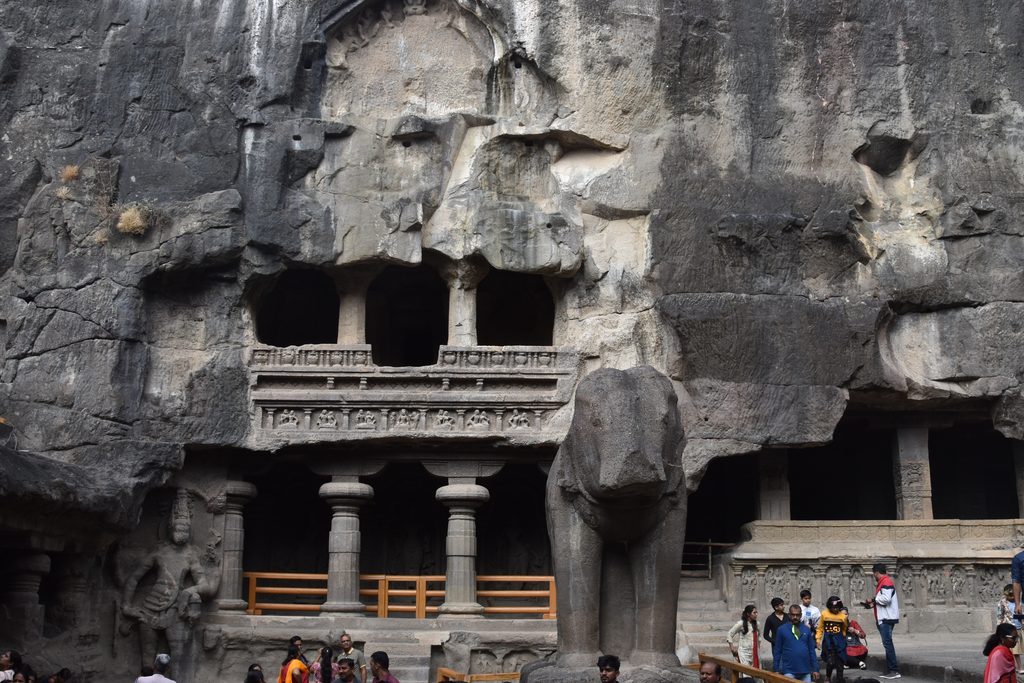
ELLORA CAVES: – Then we back to most waited, UNESCO World Heritage site — ELLORA CAVES. The caves were built during the period of 350 – 700 AD, and the structures represent the three faiths of Buddhism, Brahmanism, and Jainism.
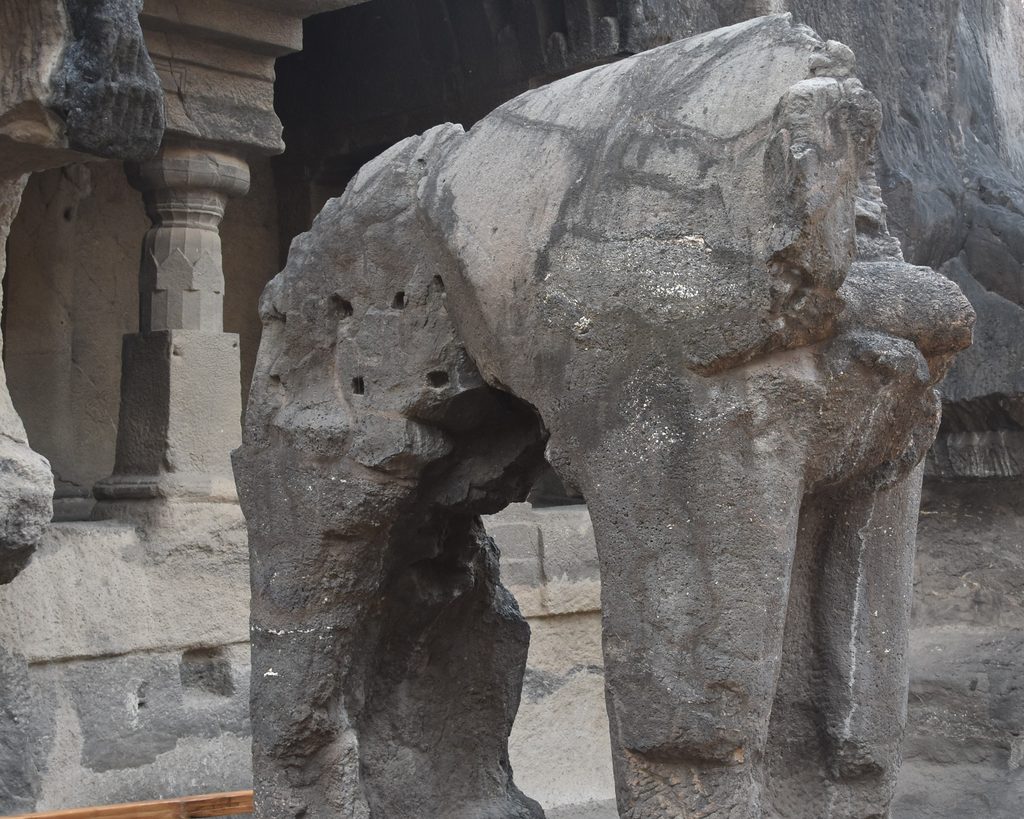
There are 17 caves dedicated to Brahmanism, 12 caves for Buddhism, 5 caves are ed for Jain. Total 34 caves are opened for tourist out more than 100 caves. All caves are excavated from the Basalt Cliffs in the Charanandri Hills. From the entrance, there is a huge garden, and at the end of this garden we started our cave journey with Cave No. 16.
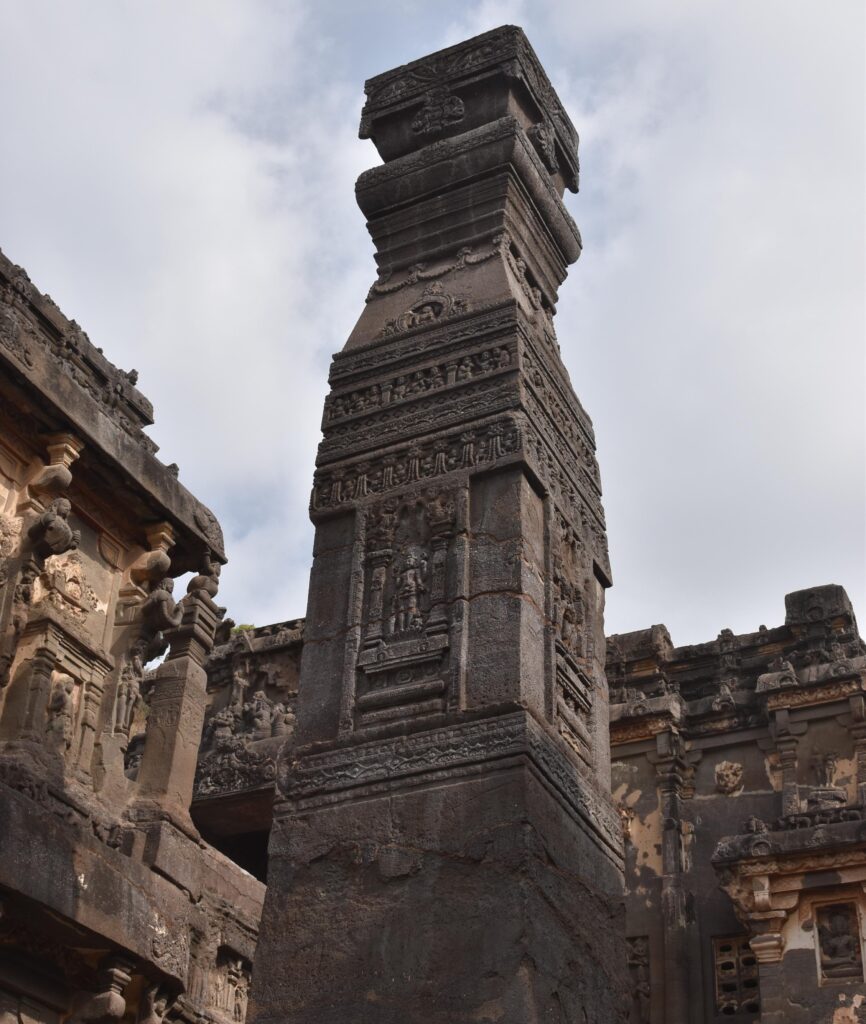
It is the main attraction of Ellora for the longest single monolithic rock excavation in the world. Also known as the KAILASHA TEMPLE, it is dedicated to lord Shiva. This multi-storied Hindu temple was built by Krishna 1 of the Rashtrakuta Empire. The entire complex is constructed in the shape of a chariot. Cave No. 15 (The cave is known as the Dashavatara Temple, situated after Ravan Ki Khai or Cave No. 14). The northern side of the temple has the reflection of Maharashtra, and the southern side of the temple is also from the Ramayana.
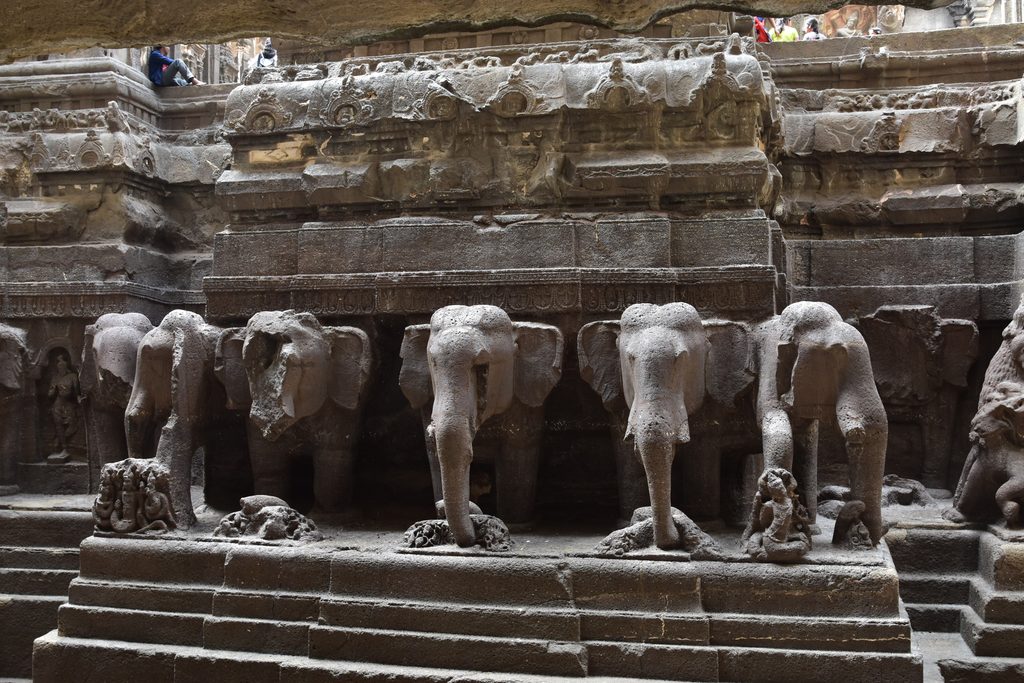
Distance from Aurangabad: 29 Km
Timings: From sunrise to sunset! (Except Tuesday)
Entry Fees: ₹30 for Indians, tourists from SAARC and BIMSTEC countries, ₹500 for tourists from other countries
DAULATABAD FORT: – From Ellora, we moved to Daulatabad Fort in the late afternoon. Ellora was very time taking trail. It took 3 hrs 20 mins to cover the 28 caves out of 34 caves. We missed 32 of the 34 caves, which belong to the Buddhist era. After lunch at Dawat Restaurant, they are specialist on Mughlai Dishes, we left for Daulatabad Fort. The fort is around 12 km from Ellora Caves. The surrounding area of the fort doesn’t have any metropolitan effects. The area is very crowded with food and fruit stalls. Street food is basically the most popular among the visitors and local people. At the entrance of the fort, we discovered the Dragon Fruit and Hanuman Fruit. Dragon Fruit is not new, but we tried the Hanuman Fruit. It is the bigger format of jackfruit, and the taste is almost the same. Panipuri is the main attraction due to its Aloo Choka pest and chilled pudina and masala mixed water. Somewhere we found the souvenir shops, belonging to the history of Daulatabad Fort. Before entering the fort, we had tasted a glass of fruit juice. Now it was time to explore the fort.
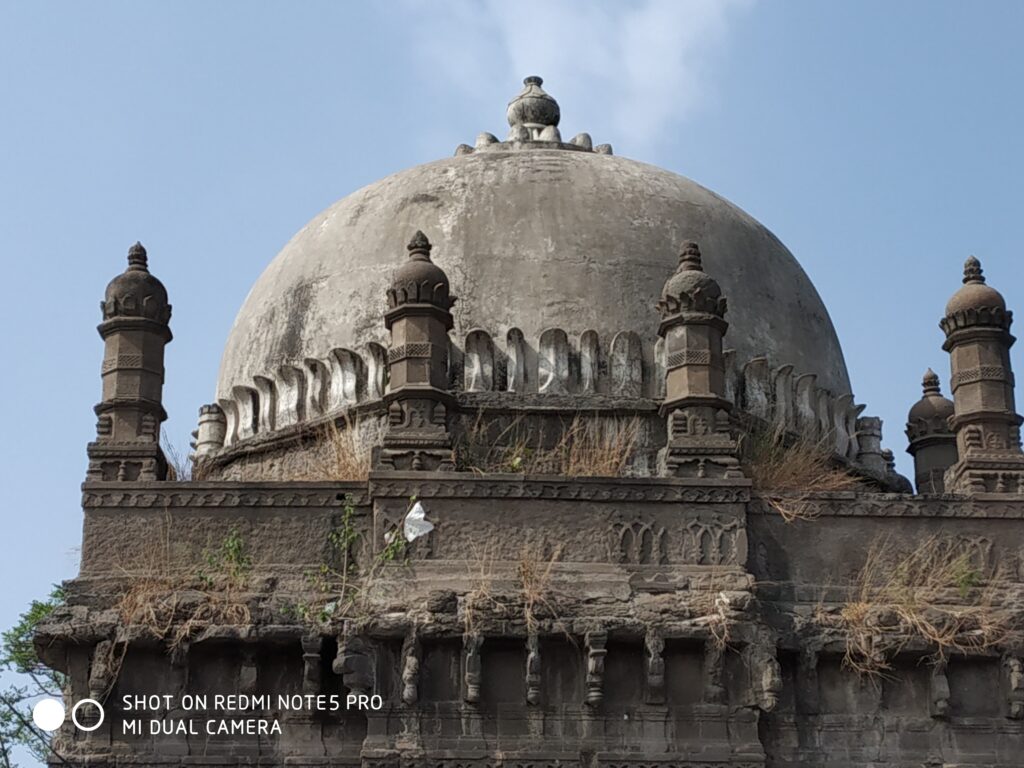
The fort is easily visible from a long distance, as if it dominates the landscape. The fort is situated on a conical granite hill rising about 200 mt above the landscape. Daulatabad Fort is also known as Devagiri or Deogiri. The fort was built by Raja Bhillamraj of the Yadav Dynasty in 1187. The fort is enclosed within 4km a 4 kmius and covered with gigantic walls. We had entered to the fort from huge wooden gate, fixed with iron spikes to protect from elephants. After the gate, there is a small courtyard, where ASI has displayed the Cannon, which has historical significance. This 12th-century fort was part of the Hindu Kingdom of Deccan and passed into the sultans of Delhi in 1308 AD. Muhammad Bin–Tughlak moved the capital of the Tughlak Dynasty from Delhi to Deogiri and renamed it Daulatabad, meaning “The City of Fortune”
There is one narrow entrance after the small courtyard. Towards the right is the storied “CHANDMINAR”, known as “The Tower Of Moon”; it looks like the “Qutb Minar” of Delhi. It was built by Ala–Ud–Din Bahmani of the Bahmani Sultanate in 1445. But before the Minar, at the left a huge water reservoir. It was used to store water during water shortages in the area. After that, we climbed up the stairs towards Bharat Mata Temple. The only Hindu temple in Daulatabad Fort. It has a little bit of a reflection of Jama Masjid. A big courtyard with a high, raised boundary made up of mixed culture. The pillars are Hindu style, and its sanctum was Islamic.
After that, we had a short trek towards the hilltop palace. There are approx. 700 stairs to reach the palace. The palace has significant importance for visitors. From this pentagonal palace, you can enjoy the panoramic view of the fort and its surrounding area.
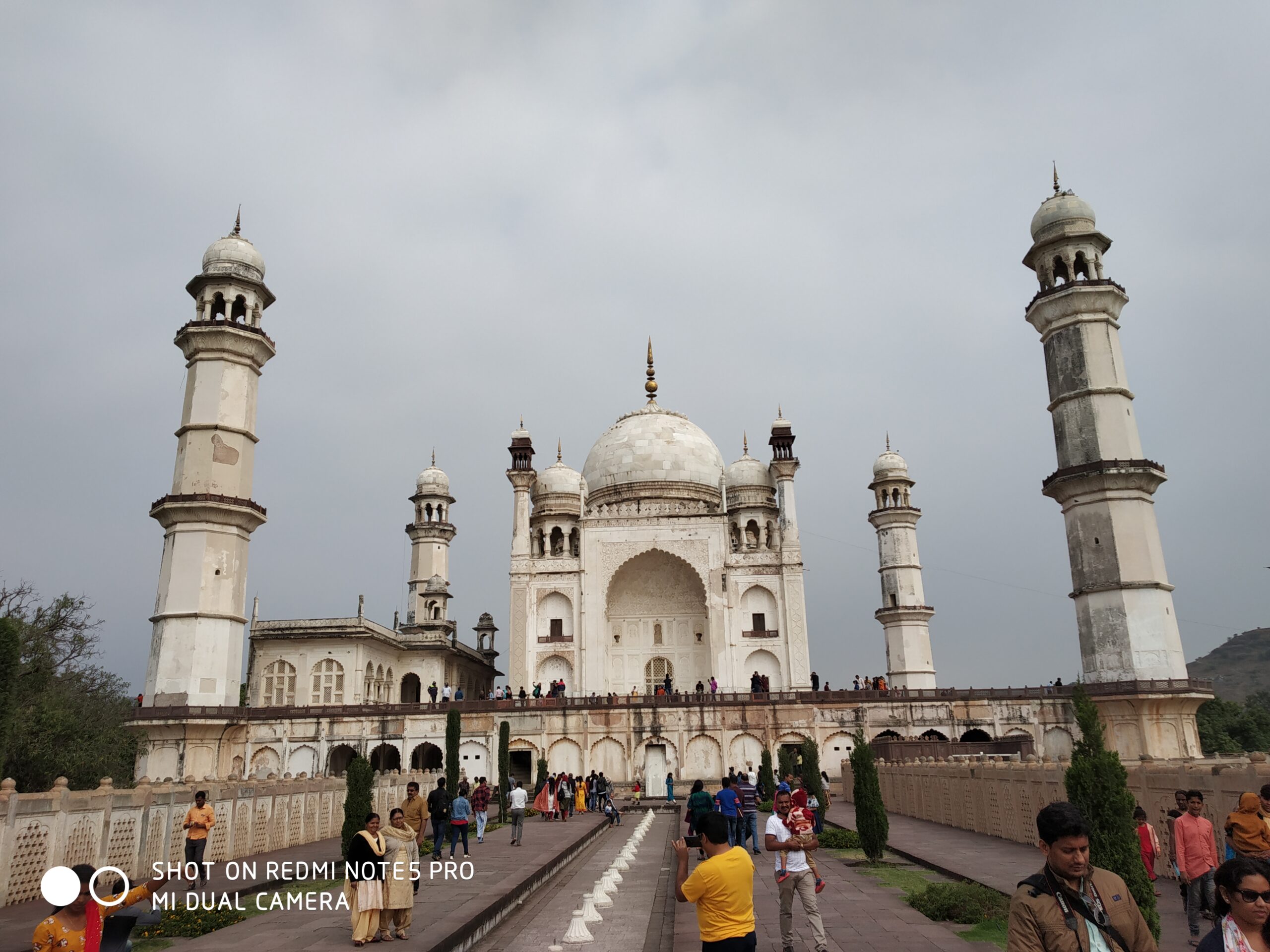
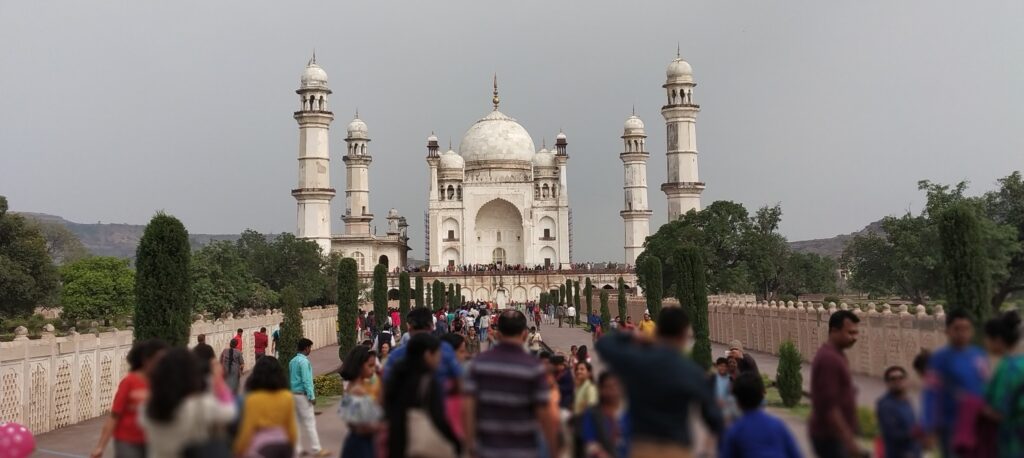
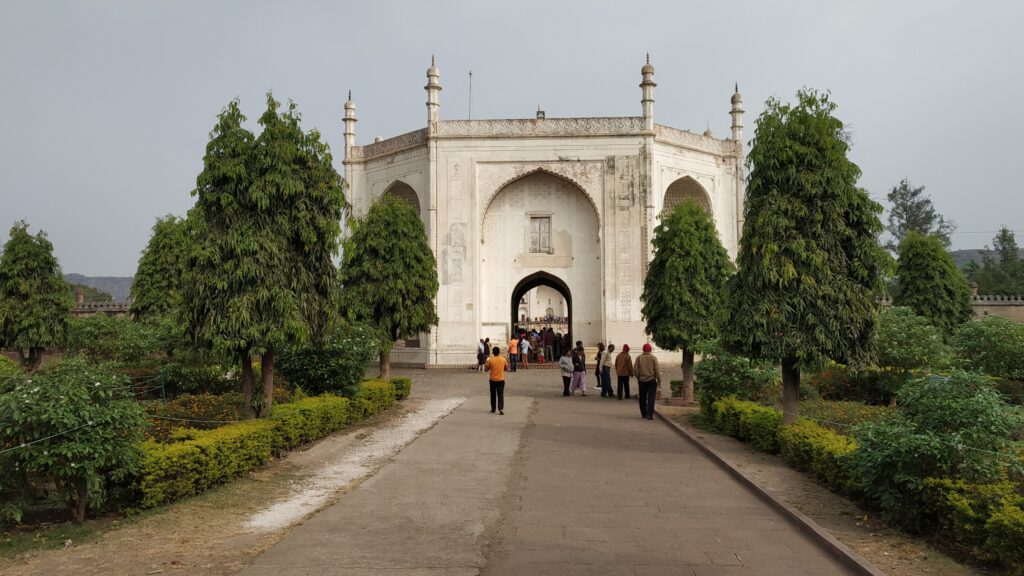
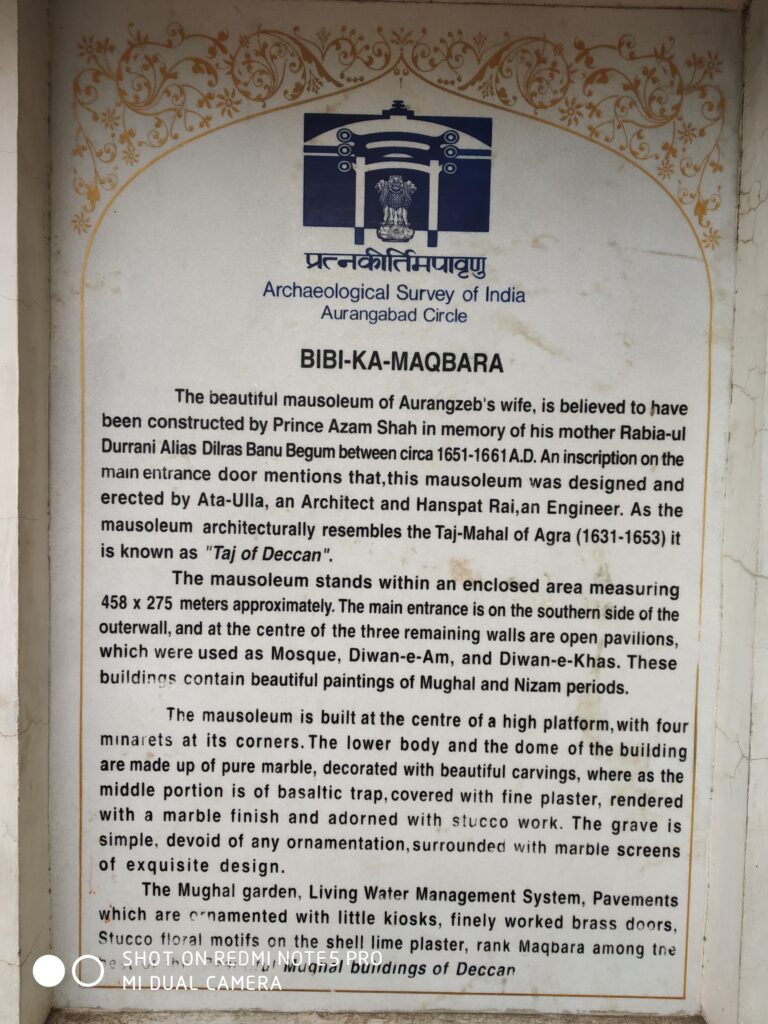
DAY 4: The day started with early morning tea and breakfast. The trip schedule was very hectic. On the last day we missed a spot due to a shortage of time. So it was the 2nd day in Aurangabad and the last day also. The last day we had started with most waited landmark – The Taj. Oops! Sorry to say that it is a replica of the Taj. The Taj of Deccan, the familiar name, is “Bibi–Ka–Maqbara. The tomb of Rabia–Ul–Durrani, mother of Prince Azam Shah, son of Aurangzeb. He built this inspiringly beautiful structure in 1679. This was the last Mughal architecture. Ata Ullah (Ata Ullah Hanspat Rai) was an architect of this tomb, who was the son of Ustad Ahmed Lahauri, the principal designer of the “Taj Mahal”. Cost of this monument was seven lacs rupees where Taj Mahal cost 32 million rupees at that time.
Aurangzeb is himself buried a few km away from this mausoleum in khuladated Khuladabad is a taluka of Aurangabad district. The place is also known as “RAUZA”. It means “Garden of Paradise”. This place is also known as “Valley of Saints”, because 1500 Sufi saints have graves here.
The construction took only 6 years compared to the 22 years for the Taj Mahal. The ground covers 458 × 275 mt. of gardens. There are four gardens based on the Charbagh design.
The mausoleum is at the central point, and the gardens surround the tomb. The gardens are covered with lush green and many seasonal flowers. At the centre of the pathway from the entrance, there are 61 fountains, and deodar trees enhance its beauty.
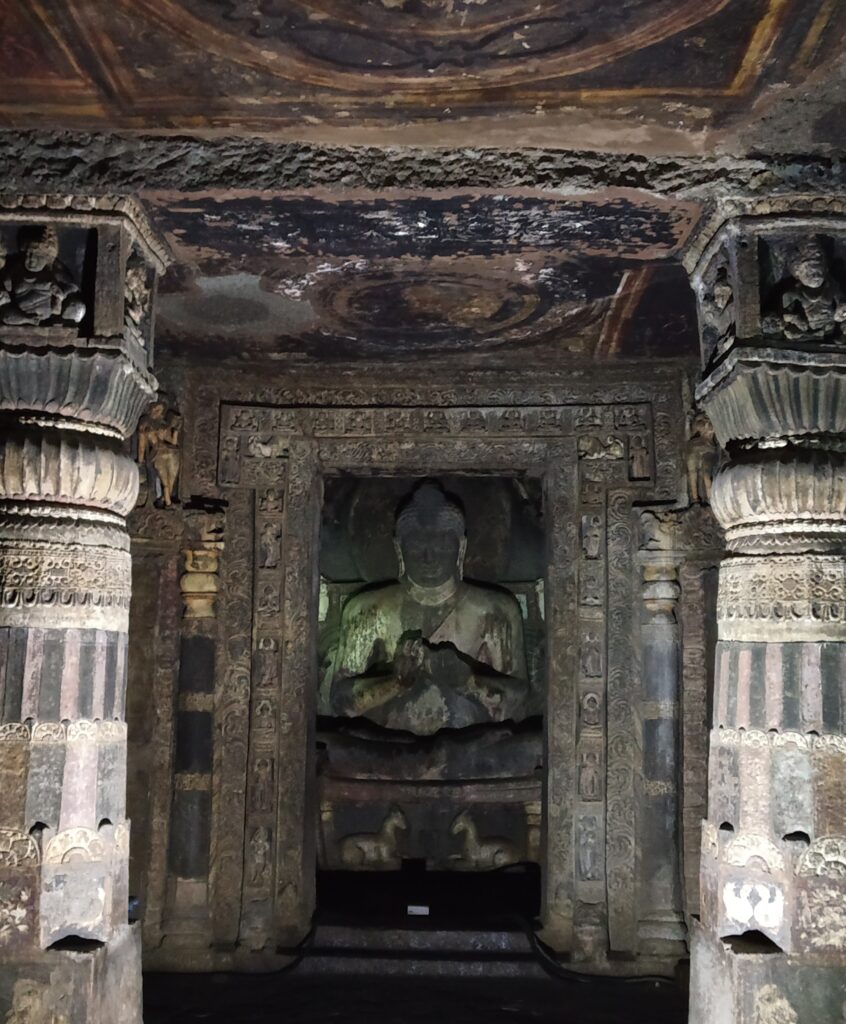
AJANTA: WORLD HERITAGE SITE:–
We left Aurangabad after exploring the Bibi Ka Maqbara. The world heritage cave site is 103 km from Aurangabad by road. Generally, tourists discover the Ajanta Caves from Aurangabad and return to the city by evening. But it is advisable that don’t travel so much after hectic caves trek. As per our itinerary, we had booked MTDC–Fardapur resort, which is around 2km from the cave site. It will be the perfect hospitality under lush greenery.
We started our journey from Aurangabad at 10.40 am. During this 3-hour trip, we took a morning snack break at a roadside dhaba. The dhaba served club sandwich with French fries and coffee. We started our journey after a 20-minute break and reached the cave at 2.10 pm during lunchtime.
Before you start the walk towards the caves, there is only one restaurant in the area: MTDC Ajanta restaurant. It is just adjacent to the cave ticket counter. But we had parked our car just 4 km before the cave due to ‘No pollution’. So we had to board the authorised bus for the caves. The 10-minute journey in the hilly region ended near the ticket counter
We had lunch in MTDC–Ajanta Restaurant with Veg-thali and Mango Lassi. The two-storeyed restaurant has served quality food with authentic Maharashtrian and North Indian options. Taste and quality are good, but prices are slightly high.
NOTE:–
- Overpriced dish, but I recommend the non-veg thali or chicken curry and Paratha with lassi.
- They don’t produce any GST Bill. But they have changed the price, including GST. So, I have a humble request to tourists: don’t pay until they produce the proper invoice.
- Credit/debit cards are not accepted here. Even online money transfer options are not available here.
- They have maintained proper hygiene, and the restaurant has satisfied us with its good food, well-behaved staff, clean utensils, and fresh atmosphere.
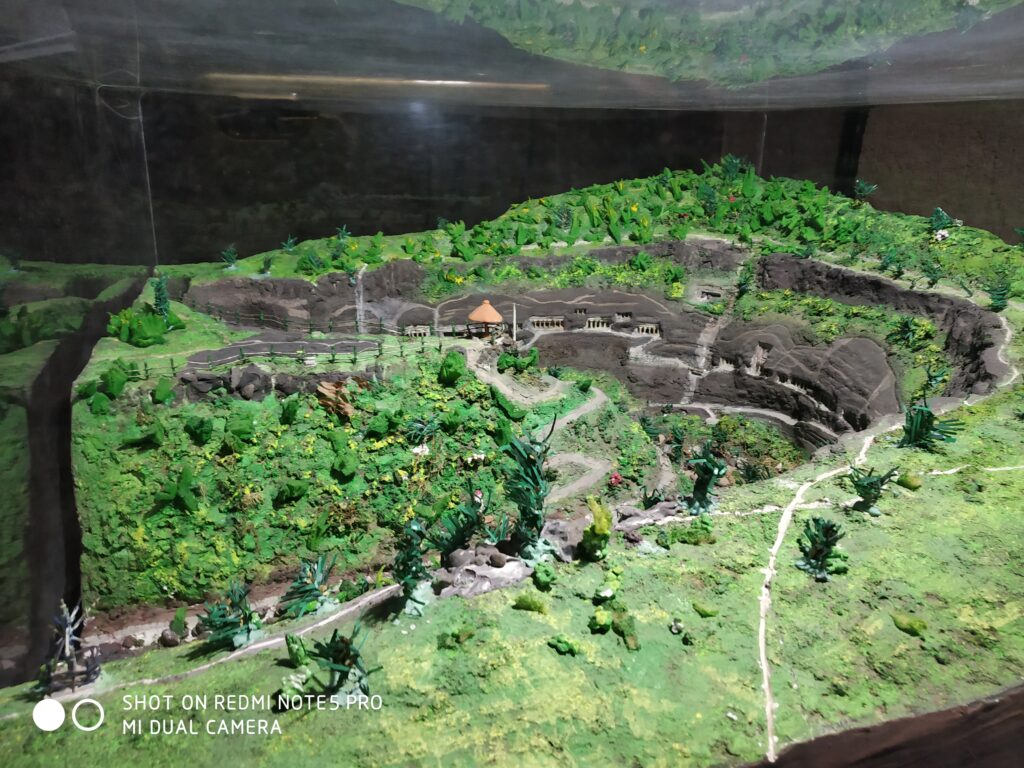
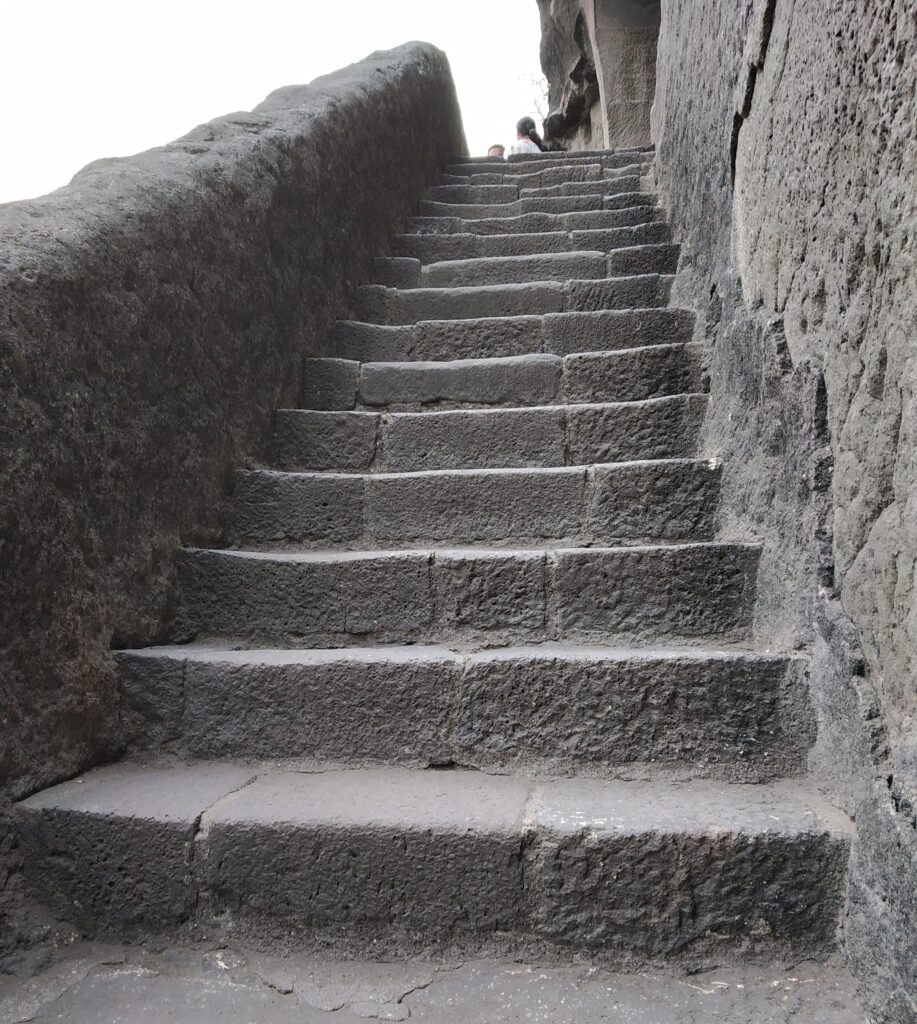
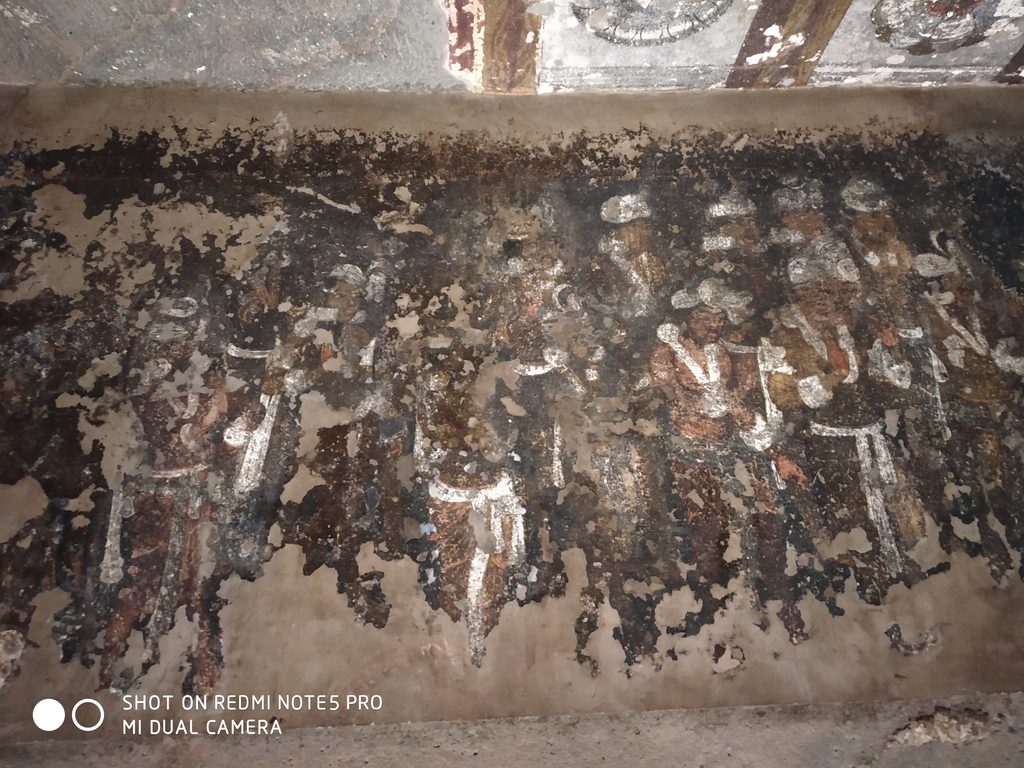
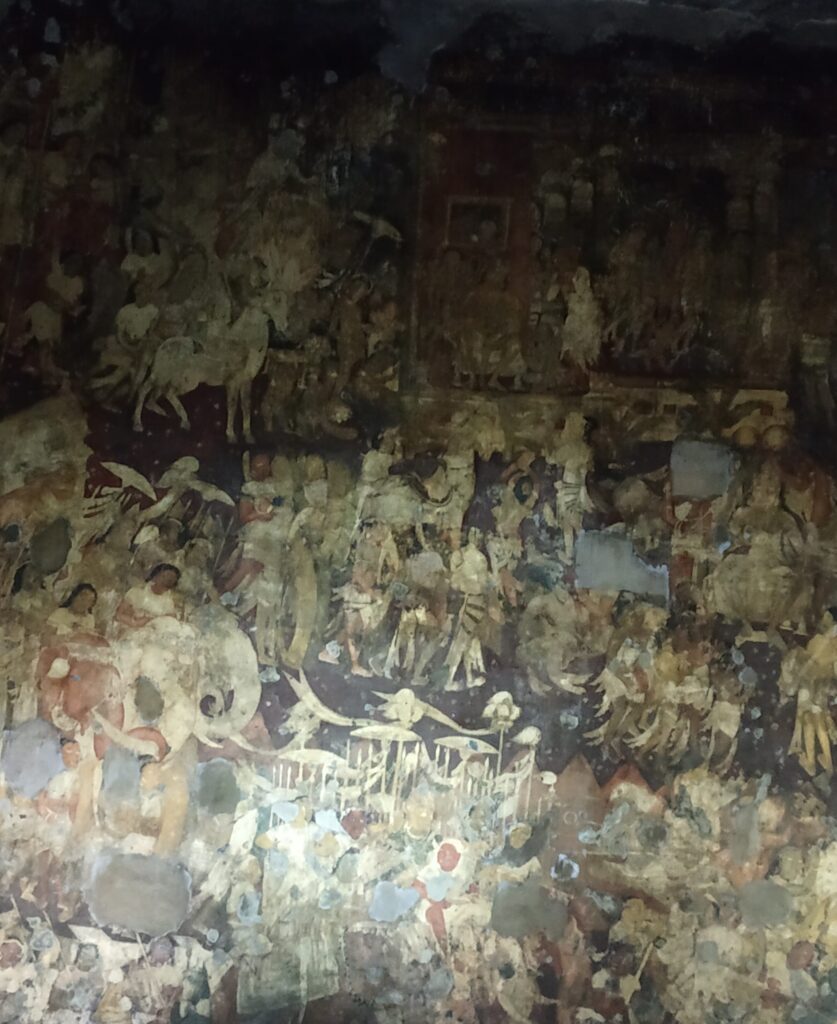
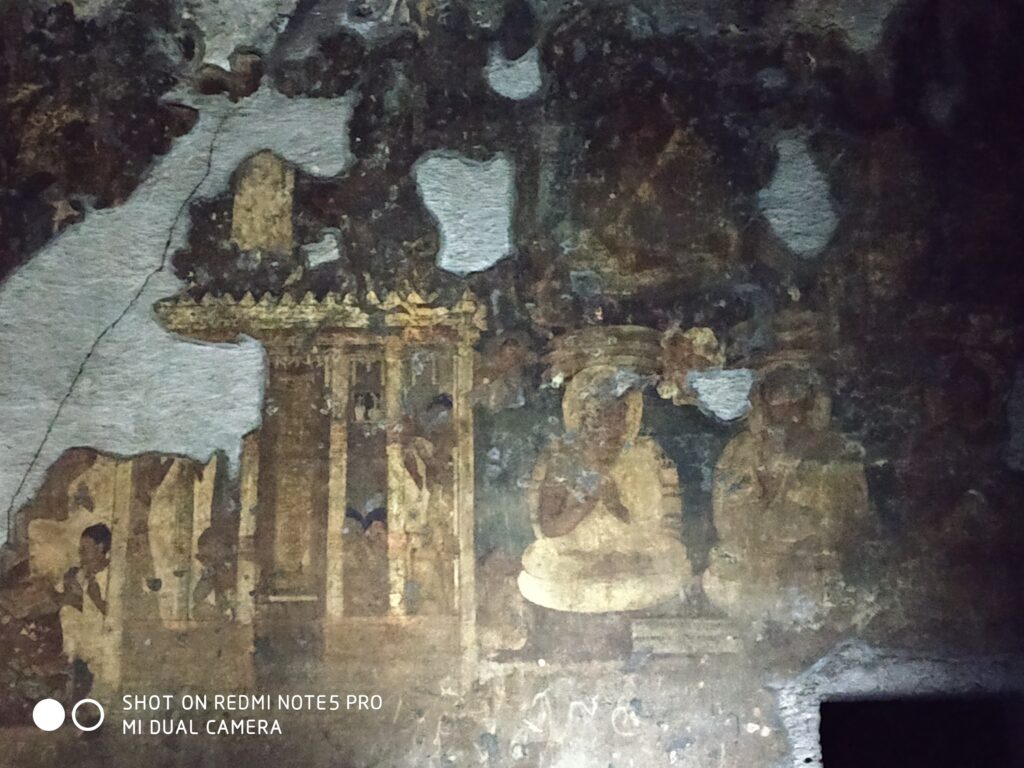
The Ajanta Caves were covered deep within the Sahyadri Hills. The caves are situated on the banks of the Waghora River. The Ajanta Caves were discovered in the 19th Century (1819). A British officer John Smith was discovered the caves during tiger hunt. There are 30 rock-cut caves, which depict the story of Buddhism from the period of 200 BC – 650AD. In 1983, it was recognised by UNESCO as a World Heritage Site. After lunch, we climbed up the stairs.
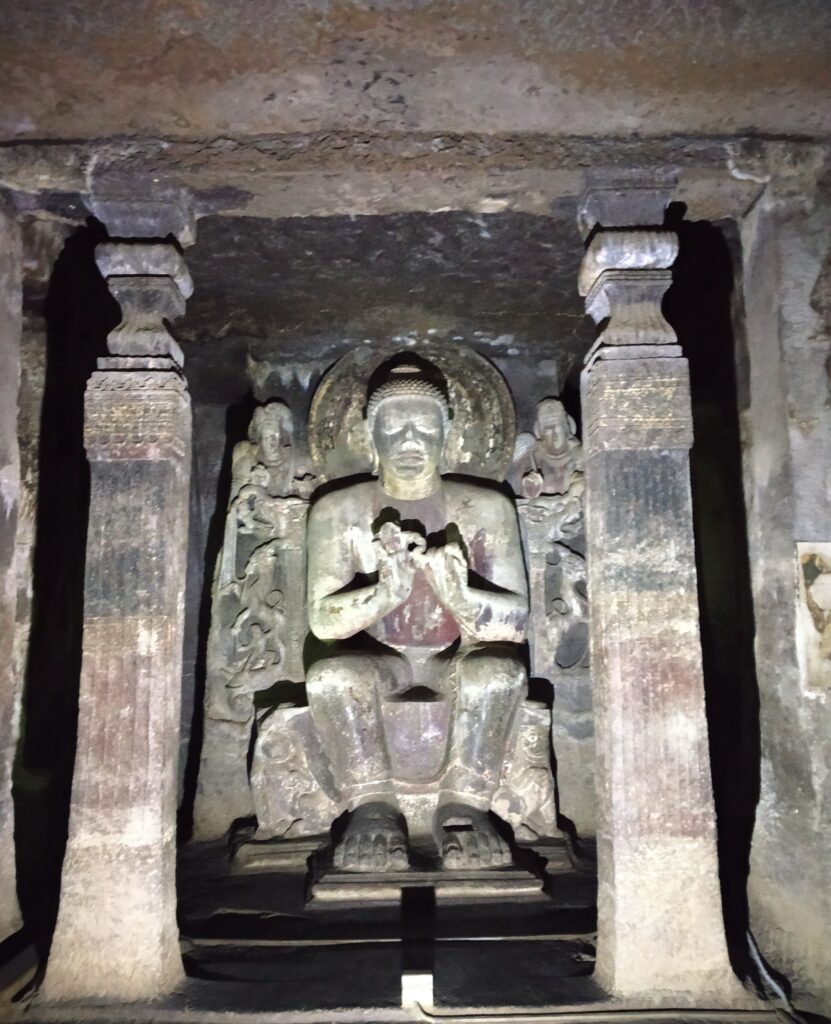
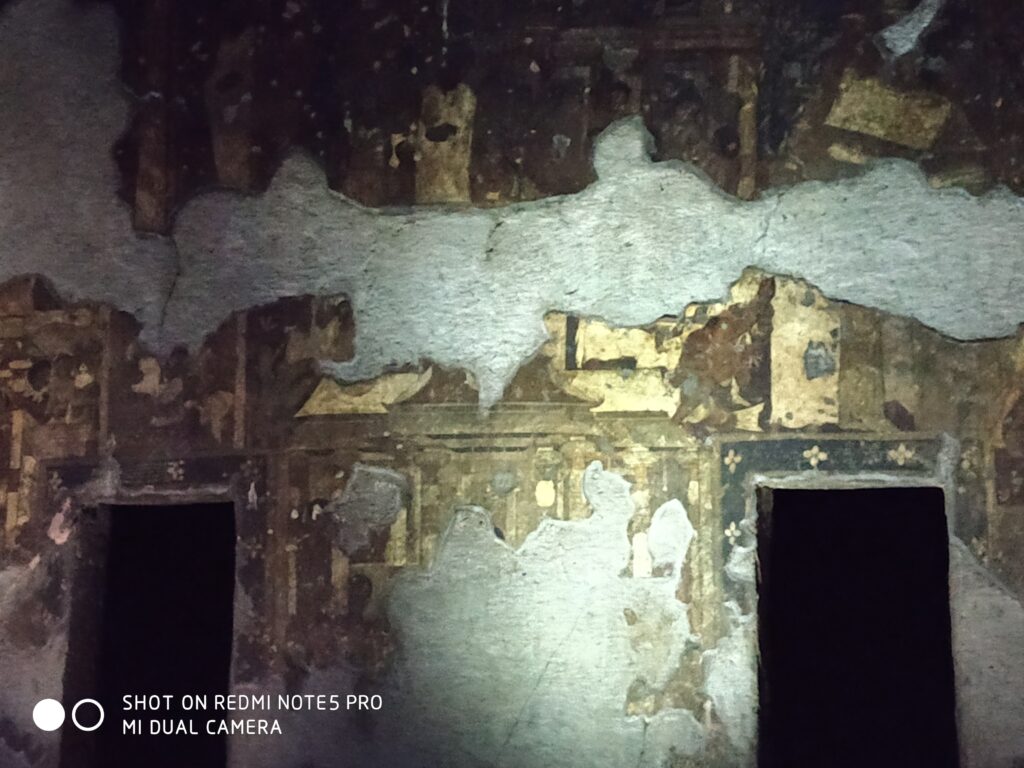
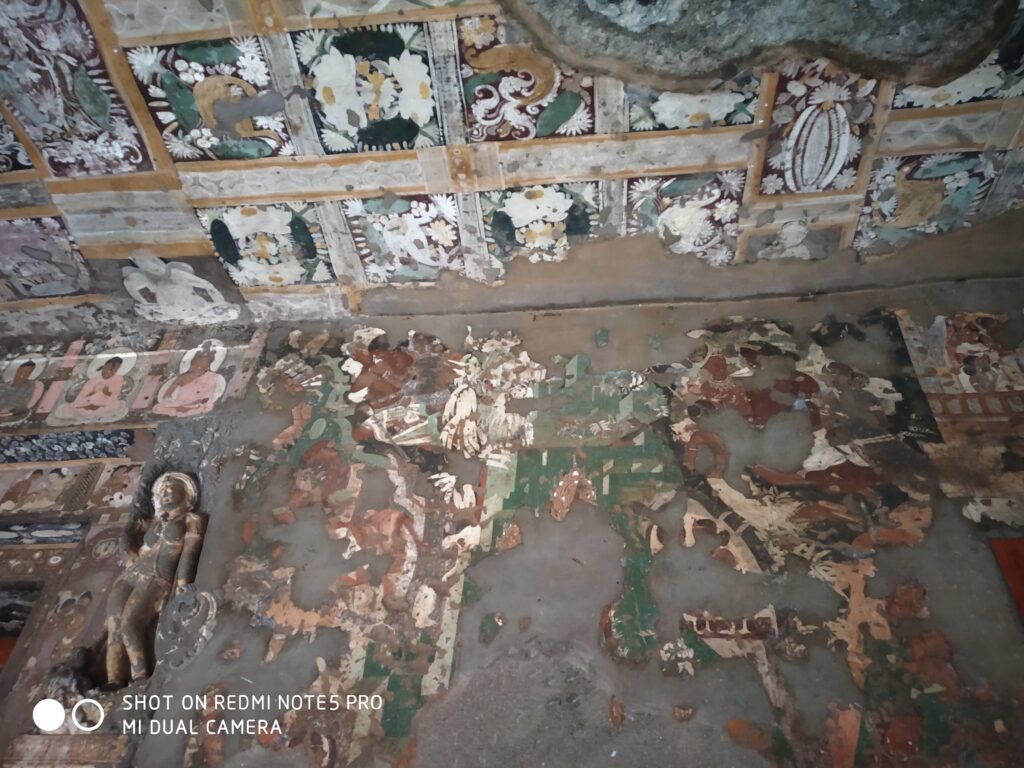
From the top, you can enjoy the incredible view of the landscape. There is a lush green mountain just opposite. To the caves. Out of 30 caves, 16 caves contain natural paintings. Five of the caves – 9, 10, 19, 26, and 29 — are Chaitya Halls, and the others are Viharas. All paintings are made up of natural materials and dyes. You will notice small holes in the floor; they were used as platters. The Ajanta Caves consist of 24 Buddhist Viharas and 5 Hindu temples.
ENTRANCE FEES: Rs. 500/- for foreigners and Rs. 30 for Indian.
TIMING: 9 am to 5.30 pm (Monday Closed)
INFORMATION and TIPS, during trips to Aurangabad City with Ellora, Ajanta Caves and other historical places—
- AREA: – 3900 Sq. km.
- TEMPERATURE: – 20O to 43OC, during summer and 10 to 32OC during winter.
- NEAREST AIRPORT: – Chhatrapati Shivaji Maharaj International Airport, 10km away from the city.
- BUS STAND: – The city is easily connected to Pune, Mumbai, Shirdi, and more. Delhi — 1371 km, Mahabaleshwar — 348 km, Pune — 233 km, Nashik — 204 km, Mumbai — 392 km, Ahmednagar — 109 Km, Shirdi — 140 km, Surat — 379 km.
- RAILWAY STATION: – Nearest railway stations are Jalgaon and Manmad. These are 59 km and 114 km from Aurangabad City Centre.
TIPS FOR TRAVELLER IN AURANGABAD
- Try Pan as per your choice at TARA PAN CENTRE in Usmanpur after dinner.
- Try Pav Bhaji from roadside stalls.
- Mughlai foods are also famous in the city. Try keema with paratha. If you are a non-vegetarian, then try Tikka Paneer Butter Masala (Cottage Cheese).
- Buy Handicraft items like Himroo shawl and Pathani Silk Sarees.
FEW FACTS
- In Maharashtra, there are 175 forts; out of these, 111 were built by Shivaji Maharaj.
- Out of 12 Jothiralinga Temples, 5 are situated in this state.
- Anudha – Nagnath Temple — 579 km from Mumbai
- Parali – Baijnath Temple — 500 km from Mumbai
- Trimbakeswar Temple — 180 km from Mumbai and 30 km from Nashik
- Bhimashankar Temple — 264 km from Mumbai
- Grishneshwar Temple — 500 km from Mumbai and 32 km from Aurangabad.
- THE ROUTE TO REACH AURANGABAD FROM PUNE:–
- Pune — Take the road behind Pune Station — Yerawada Bridge — Take night towards Nagar Road — Drive on Highway No: 27 — Ahmednagar — Aurangabad
BEST PLACE TO STAY IN AURANGABAD
Choosing the right area to stay can make your trip much easier. Aurangabad has hotels for different budgets, from affordable hotels to luxury properties.
Near Railway Station
The railway station area is a convenient choice for budget travellers and visitors arriving by train. You will find several hotels, restaurants, and local transport options nearby.
For example, Ginger Aurangabad, Treebo Lalaji'S Executive and Hotel The Sky Court are located around the railway station area.
CIDCO and Town Centre
CIDCO and Town Centre are good options if you prefer a modern area with restaurants, shopping and easy road access.
For a comfortable stay, you can consider Welcomhotel By ITC Hotels, Rama International, Aurangabad, Lemon Tree Hotel, Aurangabad or The Fern Residency Chhatrapati Sambhaji Nagar.
Near the Airport
Staying around the airport can be useful if you have an early morning flight or want easy access to the airport. Hotel Pride Elite Chhatrapati Sambhajinagar is located close to the airport.
My suggestion: For sightseeing, choose a hotel with easy road access rather than focusing only on being close to one attraction. You will probably spend a lot of time travelling between the city, Ellora and Ajanta.
HOW TO REACH AURANGABAD
Aurangabad is well connected by air, train and road. Maharashtra Tourism lists the city as a major transport hub for the region.
By Air
Chhatrapati Sambhajinagar Airport, also known as Chikkalthana Airport, is the city's main airport.
There are air connections with major Indian cities, including Mumbai, Delhi, Hyderabad, and Pune. From the airport, you can take a taxi or local transport to your hotel.
By Train
Aurangabad Railway Station is an important railway station and has connections with cities such as Mumbai, Pune, Delhi, Hyderabad, and Nagpur.
Train travel is a good option for travellers who prefer an economical and comfortable journey.
By Road
Aurangabad is connected by road with several major cities in Maharashtra.
You can travel by car, state transport bus, private bus, or taxi from cities such as Mumbai, Pune, Nashik, and Nagpur.
Road travel is particularly useful if you are planning to explore several attractions around the city.
IDEAL TIME TO VISIT AURANGABAD
According to Maharashtra Tourism, the best time to visit Chhatrapati Sambhajinagar is October to March. The weather during these months is more comfortable for sightseeing.
October to February
This is the most comfortable period for exploring the caves, forts and historical monuments. The weather is generally pleasant, making it easier to spend several hours outdoors.
March to May
Summer can be quite hot. If you visit during this period, start sightseeing early in the morning and carry water, sunglasses and sunscreen.
June to September
The monsoon brings greenery and a different charm to Maharashtra. However, rain can sometimes affect outdoor sightseeing and road travel.
Best overall choice: October to March.
FAQ ABOUT AURANGABAD
Is Aurangabad worth visiting?
Yes. Aurangabad is an excellent destination for history and architecture lovers. The city is also an important gateway to the Ajanta and Ellora Caves.
How many days are enough for Aurangabad?
Plan for 3 to 5 days if you want to explore the city and nearby attractions properly. Maharashtra Tourism also recommends an ideal duration of 3–5 days.
What are the main places to visit?
Some important attractions include:
- Ajanta Caves
- Ellora Caves
- Bibi Ka Maqbara
- Daulatabad Fort
- Grishneshwar Temple
- Panchakki
- Soneri Mahal
Ajanta and Ellora are the biggest highlights of the region.
How far is Ellora from Aurangabad?
Ellora is approximately 30 km from Aurangabad, depending on the route. Maharashtra Tourism lists the road distance at around 31 km.
Can I visit Ajanta and Ellora in one day?
It is possible, but not recommended. Both places deserve enough time, and Ajanta is considerably farther from the city. Keeping separate days will make your trip more comfortable.
Is Aurangabad suitable for a family trip?
Yes. Families can enjoy the historical monuments, caves, temples and museums. However, some attractions involve considerable walking and steps, so elderly travellers should plan accordingly.
What food should I try?
Try local Maharashtrian food and popular regional dishes. You can also enjoy traditional sweets and local snacks available around the city.
Is Aurangabad expensive?
It depends on your travel style. Budget hotels, local restaurants and public transport can help keep costs low, while luxury hotels and private taxis will increase the budget.
DOS & DON'TS ABOUT AURANGABAD
DOs
1. Start sightseeing early
Historical attractions can become tiring during the afternoon, especially in summer.
2. Wear comfortable shoes
Ajanta, Ellora, and forts involve walking, stairs, and uneven surfaces.
3. Carry drinking water
Keep a reusable water bottle with you during sightseeing.
4. Respect religious places
Dress appropriately and follow the rules at temples and other religious sites.
5. Hire a guide when useful
A knowledgeable guide can make the history and architecture of Ajanta and Ellora much easier to understand. Maharashtra Tourism maintains a list of registered tourism guides for the district.
6. Keep the heritage sites clean
Use dustbins and avoid damaging or touching ancient artwork and structures.
7. Check timings before visiting
Opening hours and entry rules can change, so check the latest information before starting your sightseeing.
DON'Ts
1. Don't touch ancient paintings or sculptures
Ajanta and Ellora are precious heritage sites. Avoid touching carvings, paintings, or protected surfaces.
2. Don't litter
Carry your waste until you find a proper bin.
3. Don't rush through the caves
Take your time to understand the history and architecture.
4. Don't ignore the weather
Summer heat can be strong. Avoid spending long periods outdoors in the afternoon.
5. Don't enter restricted areas
Always follow signs, security instructions, and instructions from site staff.
6. Don't depend completely on last-minute transport
If you are planning Ajanta or Ellora visits, arrange your transport in advance, especially during busy travel periods.